Scanners, Hoarders, and Collectors
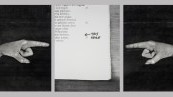
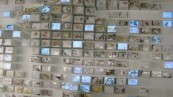
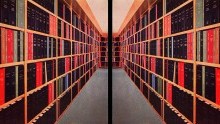
By Matt BorrusoWith Scanners, we wanted to question the Internet database of books as a small and artificially constructed space defined by money and popularity rather than aesthetics or information.
More »

Walter Benjamin wrote in Illuminations that “ownership is the most intimate relationship that one can have to objects.” In an effort to explore the limitations of this concept, we have invited contributors to consider collecting as both an individual and instituting activity, as well as the relationships, intimate or problematic, that people have with the objects they live with. How does desire, the thrill of the hunt, and identity play into collecting? What constitutes a collection?
Acknowledging that collecting impacts the context not only of what is added but what already exists, we conceived this issue to itself be a collection. Launching with four articles on February 6, 2014, we've continued to “acquire” articles over the past ten months, providing a range of perspectives on the relationship between people and the objects they choose to bring into their lives.
Collecting can conjure up a monied world of auction houses, art consultants, and appraisers as much as it can a more modest image of a home full of framed pieces obtained through exchange amongst friends. However, the ethos of collecting goes well beyond the art world. Christina Catherine Martinez explores differing intimacies between subject and object in relation to fashion, both virtual and real. Matt Borruso revisits his 2011 temporary book space project and taps into the border between collecting and hoarding. Ela Bittencourt traces how queer genealogies of creative resistance are transmitted through the circulation and recirculation of one very personal collection. Rachel Endosa describes how the paper dolls that her grandmother drew and she collects bind together personal histories across generations and physical distance. The narrative imbued in the object comes to the fore through multiple articles, most notably in the selected columns produced during our residency at di Rosa, in Napa. That series also points to how the objects mold the life and behavior of those who own them, which both Glen Helfand and Djinnaya Stroud investigate through their conversations with collectors.
As with any collection, there is always room for more, and we may not yet be done with this subject. But we thought it fitting to end 2014 by revisiting this issue in its expanded form, as a marker of our activities over these months, and a suggestion of how we're looking ahead.—Art Practical Editors
With Scanners, we wanted to question the Internet database of books as a small and artificially constructed space defined by money and popularity rather than aesthetics or information.
More »
As an act of fantasy and provocation, Kisieland also underscores the power of art to redefine personal experience in relation to history.
More »
Using the surveillance and stake-out techniques she learned, Miller turned an eye toward the art world and spent six months undercover trailing some of San Francisco's most elusive members of the art community, its collectors
More »
Collecting is the work of fencing off some discernible patch of belonging amid the wild landscape of existence.
More »
John Olmsted's collection at the Earth Planet Museum defies the notion that museums must conform to a set physical or ideological structure.
More »
The galleries are approaching it wrong. The problem is not getting people to see the art. The problem is getting people to care.
More »
Since I was eight years old, she has mailed packages of letters and books of paper dolls to me.
More »
The term “non-functional art” isn’t satisfying as an antonym for functional art. All art serves a function, even if that function is solely aesthetic.
More »
One feels palpably that di Rosa is a place that has been cultivated, nurtured, grown.
We drove up from San Francisco to di Rosa on an exceedingly hot day in late September, shortly after the Napa earthquake and the same weekend a closure on Highway 37 slowed wine-tasting traffic to a walking pace.
More »
Jackie Im and Aaron Harbour ruminate on the di Rosa collection and its founder in writing, while Erin Jane Nelson provides her interpretation through altered digital photographs.
More »Notes from di Rosa is produced in conjunction with Art Practical's yearlong residency at di Rosa, in which the museum's collection serves as a focus and cornerstone for an in-depth exploration of Northern California contemporary art.
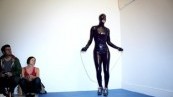
These are artists who are taking on the medium and working to push beyond the traditional art exhibition, the all-too-trite blockbuster, or the indie romance plot structure. They aren’t simply adopting the standard entertainment format; they’re examining its structure.
For this assemblage, we invited a range of artists to create small, artist-led workshops devised to spur dialogue, action, and art making around questions of art, labor, and economics. Others led discussions and surveys on the wider Bay Area landscape of cultural labor.
Here, readership takes on multiple valences: an intellectual orientation, an activity implicated in identity and community formation, a mode of exchange, a site or location of acculturation, a group of consumers.
This issue of Art Practical is intended to be a highly personal selection of eleven exhibitions that cumulatively form a history of contemporary art in the Bay Area over the past half-century.
4.27
/ From the Archives: Crafts and ArtsAugust 20, 2013. In his interview with Art Practical, Glen Adamson states that he wants “craft to be not so tacit or unspoken, not so hidden offstage. I want it to be something that everyone sees happening before their eyes and thinks constantly about how it should be structured.” It’s hard to think of an art-related word as thorny, sticky, and slippery as craft. Anyone who has ever tried to translate the word into another language knows…
4.25
/ From the Archives: Worse Than QueerAugust 13, 2013. This issue’s title comes from the Bikini Kill song “Suck My Left One,” (1992) in which frontwoman Kathleen Hana exhorts her fellow sisters-in-arms to show the world that they’re “worse than queer.” I read the line as both a rallying cry for the radical possibilities and reminder of the high stakes of a life lived, to whatever degree, outside of dominant norms of gender and sexuality.
However, the stakes and possibilities of…
August 14, 2013. Art Practical and Daily Serving are proud to jointly participate alongside other art media in heralding A Day for Detroit. Eight writers from both publications have each selected a work from the collection of the Detroit Institute of Arts (DIA), a treasure trove that could inconceivably be sacrificed if Detroit’s emergency manager forces a sale of the collection to alleviate some of the city’s staggering debt. We present the works here along with commentary…
4.24
/ From the Archives: InstabilityAugust 6, 2013. Art produced on the West Coast often eludes easy definition. Its slipperiness does not stem from a lack of clarity or rigor, but rather from an embrace of the unstable. Its iconoclastic resistance to simple legibility springs in part from the unyieldingly sublime western landscape, which simultaneously underpins and threatens every westerner’s existence. California, and particularly the Bay Area, amplifies this unstable potential by combining a cacophonous cultural confluence with the most volatile and majestic aspects of nature.
July 31, 2013. Though Art Practical has always published profiles closely examining the work or lives of artists who give lectures or public workshops in the Bay Area, we’ve dedicated a portion of every issue to the Visiting Artist Profile series since our third year of publication. The profiles collected here represent the pioneering writers who have brought their own unique approaches to this regular feature since its inception.
Elyse Mallouk wrote the first installment of the Visiting Artist…
Each day, it seems, some “Fill-in-the-blank” collapse captures space as a front-and-center headline in daily papers. It is not surprising that during this time, artists are working to incorporate local, global and personal politics into their work.
July 16, 2013. It’s jocks vs. nerds: athletic and artistic abilities are unrelated if not mutually exclusive, if we are to believe our friends at Bad at Sports, who note, “if you were good at sports you were probably too busy dating to be that interested in art.” Enter Matthew Barney, who counters this limiting perspective with an athletic bravura grounded in metaphors of muscles and the body’s response to distress, which is central to his…
July 9, 2013. Photography is 175 years young. Throughout its lifetime, its uses and perceptions have shifted radically from novelty to ubiquity and from scientific tool to fine art medium. Not only has photography changed how we see the world with the naked eye, it has ensured that we always see with perceptive vision. People are more observant, more discerning of those decisive moments when one might want or need to stop and look, commit a sight to memory, whether mentally or digitally, as is now often…
July 2, 2013. The essays, interviews, and reviews chosen for this issue, whose title comes from the 1866 Bayard Taylor poem The Picture of St. John, reflect a particular willingness to investigate art and praxis in an open manner. These keen and thoughtful writings, as well as the events and exhibitions on which they report, are not prescriptive in their opinions nor attitudes, nor do they attempt to be comprehensive.
Instead, some of these articles offer snapshots of the here and now. For…
June 25, 2013. Building a life in an arts community is not always a straightforward task. Emerging artists, critics, curators, and arts workers all face multiple options when it comes to finding and defining their role in the Bay Area—not to mention the national and international scene, and the unwieldy Internet. In pieces from four years of AP archives, writers address a wide array of responses to these various forking paths, reflecting on institutional setbacks and local growing pains, but also on the…