Allen Ruppersberg
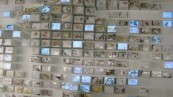
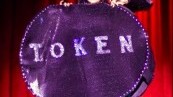
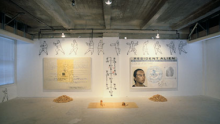
By Elyse MalloukRuppersberg’s work has had tremendous influence on artists operating in the hazily defined territory of the public sphere.
More »
July 31, 2013. Though Art Practical has always published profiles closely examining the work or lives of artists who give lectures or public workshops in the Bay Area, we’ve dedicated a portion of every issue to the Visiting Artist Profile series since our third year of publication. The profiles collected here represent the pioneering writers who have brought their own unique approaches to this regular feature since its inception.
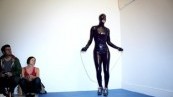
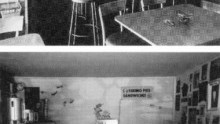
Elyse Mallouk wrote the first installment of the Visiting Artist Profile series about Allen Ruppersberg shortly after his 2011 conversation with Constance Lewallen at the Kadist Art Foundation (which at the time sponsored the series). Mallouk uses the space to delve into works like Al’s Cafe (1969), focusing mainly on how Ruppersberg has had tremendous influence on artists today. In contrast, Brandon Brown’s profile of Gabriel Sierra is a snapshot of the artist as he builds his own theoretical foundations for a successful contemporary practice.
In Art Practical’s fourth year, Matthew Harrison Tedford became the primary contributor to the Visiting Artist Profiles series, and we feature two very different selections from him here. In his profile of Young-Hae Chang Heavy Industries, he focuses on relaying his experiences of viewing their art, at one point deliberating on whether the animation work Cunnilingus in North Korea (2003) is meant to be understood or not. At the other end of the spectrum, his profile of Hung Liu provides readers with much of the biographical background needed to fully place and appreciate the artist’s work.
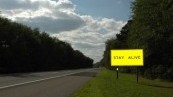
Combining overviews of an artist’s oeuvre with insightful biographical detail, these profiles give critical context to artists who are currently visiting or exhibiting in the Bay Area. Alex Bigman’s profile of ISHKY, for example, sheds light on the mysterious numbers that were written across the Bay Area’s sky on September 12, 2012. While the Visiting Artist Profiles often provides context for artists’ works that may sometimes be left out of an exhibition, they have the power, more than anything else, to actively connect history with contemporary practices and engage Art Practical readers in the conversations going on all around us. Enjoy. - Catherine McChrystal and Matthew Harrison Tedford
________
Ruppersberg’s work has had tremendous influence on artists operating in the hazily defined territory of the public sphere.
More »


4.28
/ From the Archives: Shotgun!4.27
/ From the Archives: Crafts and ArtsAugust 20, 2013. In his interview with Art Practical, Glen Adamson states that he wants “craft to be not so tacit or unspoken, not so hidden offstage. I want it to be something that everyone sees happening before their eyes and thinks constantly about how it should be structured.” It’s hard to think of an art-related word as thorny, sticky, and slippery as craft. Anyone who has ever tried to translate the word into another language knows…
4.25
/ From the Archives: Worse Than QueerAugust 13, 2013. This issue’s title comes from the Bikini Kill song “Suck My Left One,” (1992) in which frontwoman Kathleen Hana exhorts her fellow sisters-in-arms to show the world that they’re “worse than queer.” I read the line as both a rallying cry for the radical possibilities and reminder of the high stakes of a life lived, to whatever degree, outside of dominant norms of gender and sexuality.
However, the stakes and possibilities of…
August 14, 2013. Art Practical and Daily Serving are proud to jointly participate alongside other art media in heralding A Day for Detroit. Eight writers from both publications have each selected a work from the collection of the Detroit Institute of Arts (DIA), a treasure trove that could inconceivably be sacrificed if Detroit’s emergency manager forces a sale of the collection to alleviate some of the city’s staggering debt. We present the works here along with commentary…
4.24
/ From the Archives: InstabilityAugust 6, 2013. Art produced on the West Coast often eludes easy definition. Its slipperiness does not stem from a lack of clarity or rigor, but rather from an embrace of the unstable. Its iconoclastic resistance to simple legibility springs in part from the unyieldingly sublime western landscape, which simultaneously underpins and threatens every westerner’s existence. California, and particularly the Bay Area, amplifies this unstable potential by combining a cacophonous cultural confluence with the most volatile and majestic aspects of nature.
Each day, it seems, some “Fill-in-the-blank” collapse captures space as a front-and-center headline in daily papers. It is not surprising that during this time, artists are working to incorporate local, global and personal politics into their work.
July 16, 2013. It’s jocks vs. nerds: athletic and artistic abilities are unrelated if not mutually exclusive, if we are to believe our friends at Bad at Sports, who note, “if you were good at sports you were probably too busy dating to be that interested in art.” Enter Matthew Barney, who counters this limiting perspective with an athletic bravura grounded in metaphors of muscles and the body’s response to distress, which is central to his…
July 9, 2013. Photography is 175 years young. Throughout its lifetime, its uses and perceptions have shifted radically from novelty to ubiquity and from scientific tool to fine art medium. Not only has photography changed how we see the world with the naked eye, it has ensured that we always see with perceptive vision. People are more observant, more discerning of those decisive moments when one might want or need to stop and look, commit a sight to memory, whether mentally or digitally, as is now often…
July 2, 2013. The essays, interviews, and reviews chosen for this issue, whose title comes from the 1866 Bayard Taylor poem The Picture of St. John, reflect a particular willingness to investigate art and praxis in an open manner. These keen and thoughtful writings, as well as the events and exhibitions on which they report, are not prescriptive in their opinions nor attitudes, nor do they attempt to be comprehensive.
Instead, some of these articles offer snapshots of the here and now. For…
June 25, 2013. Building a life in an arts community is not always a straightforward task. Emerging artists, critics, curators, and arts workers all face multiple options when it comes to finding and defining their role in the Bay Area—not to mention the national and international scene, and the unwieldy Internet. In pieces from four years of AP archives, writers address a wide array of responses to these various forking paths, reflecting on institutional setbacks and local growing pains, but also on the…
June 13, 2013. For my fourth birthday, my father took me to the Meadowlands racetrack in New Jersey, where we bet on the fourth horse, which won. Afterwards, he took me to a pub and bought me a Shirley Temple with the winnings. I recall a midday drunk leaning across the bar and saying “Forty-four! You don’t look old enough.” It is a very happy memory, and four has been my favorite number ever since. It is perhaps appropriate, then, that this…
May 30, 2013. As the University of California, Berkeley Art Museum and Pacific Film Archive begins construction on its new home in downtown Berkeley, and as the pending three-year closure of the San Francisco Museum of Modern Art on June 2 is just days away, the expected radical spatial reconfiguration of each institution has prompted an increasing level of conversation, speculation, and even anxiety among the audiences for both. Just as these museums' edifices will be permanently altered or relocated, so too will our recognition of and…
May 7, 2013. In her review of the symposium “Painting Expanded,” Leigh Markopoulos describes participant Tom LaDuke’s practice in a manner that resonates with both reviews of Christian Marclay’s The Clock included in this issue. She notes “In situating the development of his art directly alongside his life experiences, and in expressing doubt and desperation, LaDuke placed painting firmly at the center of a sentient artistic practice.” We can't divorce art from life, and the time…
April 24, 2013. Astrophysicist Carl Sagan and the philosopher Henri Lefebvre make for interesting bedfellows. Matt Stromberg quotes Sagan in his review of Falling from Great Heights, in which the scientist describes contemplating the cosmos as “a faint sensation of a distant memory.” Meanwhile, John Zarobell calls upon Lefebvre's idea that “[e]very language is located in a space...and every discourse is emitted from a space.” However much of a stretch it is to connect cosmology to Marxism, the…
April 9, 2013. Fittingly, one of the most the widely circulated quotes following the passing of film critic Roger Ebert on April 4 expressed the contentment he found in Richard Dawkin's concept of memes, which, Ebert noted, "move from mind to mind as genes move from body to body." Memes have a tendency to disrupt claims to authorship and audience as they are perpetuated and recreated: they never really belong to anyone, no matter how public their circulation. Here, Matt Sussman, in his review of The…
Go to issue »
March 26, 2013. Somewhere between the crosshatched, imagined utopias of Lebbeus Woods and the fan-shaped concrete edifice of the UC Berkeley Art Museum (BAM/PFA) lies the space where history can "rewrite itself into the future,” as Ellen Tani quotes New Museum director Lisa Phillips in her review of 1993. Woods conjured a vision for architecture that allowed the tumult of the present to intervene in his forms, so that one could perceive the human capacity to resist or create. In February, the legendary…
March 12, 2013. As Matt Stromberg notes in his review, the closure of the Colby Poster Printing Company at the end of 2012 halted production of the broadsheets that had become a ubiquitous facet of the Los Angeles cityscape. In a city characterized as continually erasing and recreating itself, one wonders for how long their absence will be discernible before being swallowed up by the relentless flow of the present. Similarly, in discussing Sadie Barnette’s current exhibition, Liz Glass highlights the entropic degradation that blurs…
February 26, 2013. Building a house of cards is an undertaking that courts precariousness and demands perseverance. Mary Anne Kluth elucidates this latter quality when she describes how the assembled cards in Elisheva Biernoff’s sculpture House of Cards (2012–13) “suggest mastery and dedication.” Rigorous devotion is also central to the artistic practices of Jay Defeo, Colter Jacobsen, and Takming Chuang, all of who, in their own way, strike a delicate balance between structure and impermanence. At the same time, Glen…
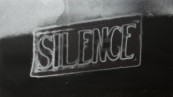
February 12, 2013. The subject matter of the cover image for this issue, Christian Marclay's 2006 silkscreen, Silence (The Electric Chair), was a sign that appeared in the execution chamber at Sing Sing prison, and more specifically, in Warhol's series of silkscreened images of the electric chair housed there. One wonders who is commanded to be silent: the condemned, the executioner, or the witnesses? Several of the articles in this issue look at practices that navigate around the strictures, institutional or otherwise, that would enforce…
January 29, 2013. In this issue, Art Practical is honored to present the U.S. premiere of No Portraits, a photo-performance portfolio by Guillermo Gómez-Peña that pays tribute to eight artists influential to his career. The ever-inventive artist describes his close collaborations with numerous photographers over the years in creating such portfolios of performances enacted strictly for the camera. As subsequent witnesses to these performances, we see Gómez-Peña’s close scrutiny of…
January 17, 2013. Even without the vividness of Randall Miller's descriptions, we would recognize the photographs about which he writes. The gestures that herald the disbelief, heartbreak, and grief of an entire town are readily recalled or at hand, preserved in media and in memory. They are already the signifiers—the vocabulary—for so many things: Newtown, gun violence, senselessness. This role disallows for the "tender neutrality" that Matthew H. Tedford attributes to photojournalist Gabriele Stabile's photographs, which do not "sensationalize, glorify, or villainize;…
December 18, 2012. As 2013 approaches, we take a moment to reflect on some of the conversations published during what has been an invigorating and ambitious year for Art Practical. Our seventieth issue is a snapshot of the forms those conversations have taken, beginning with some of the outstanding interviews that have invited artists and cultural producers to speak frankly about their practices. It includes a selection from the Visiting Artist Profile series, which highlights the critical dialogue that reverberates in the various local lecture…
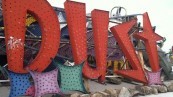
December 4, 2012. The aptly named Bone Yard, the main exhibition space for the Neon Museum in Las Vegas, prompts comparison to both Rudolf Nureyev: A Life in Dance at the de Young Museum and Wade Guyton: OS, the artist’s mid-career retrospective at the Whitney Museum of American Art. Mary Anne Kluth notes that the retired casino signs function as talismans for an oral history of the community and folklore that fall outside the glare of the working lights of…
November 15, 2012. We are excited to present the Miami issue, the product of a two-month residency at LegalArt earlier this fall. The articles included here arose from hours of conversations with local artists, curators, writers, and collectors, as well as the generosity of our colleagues at the Miami Rail.
Miami artists often describe their city as the Wild West of the art world in the United States, and for good reason; it possesses a combination of necessary resources and unsanctioned, under-the-radar…
October 23, 2012. The 2012 Nobel Prize in Physiology or Medicine went to the discovery that mature tissue cells don’t have to be confined to specialized states; they can be reprogrammed into an immature stage known as pluripotent stem cells, which in turn can be converted into any type of tissue cell in the body. It is a discovery that has opened up a vast field of research in treating diseases from cancer to diabetes. Imagine an Alzheimer's patient whose skin cells have been used…
October 9, 2012. The title for this issue comes by way of the Miami-based artist Domingo Castillo, who used the phrase to describe the opportunity to work in a location remote from the usual hub of artistic activity, in which the effort to get there suggests curiosity and potentiality rather than inconvenience or unfamiliarity. It is a concept that resonates throughout the articles included here, most evidently in Natasha Boas's review of Six Lines of Flight, but certainly also in Alex Bigman's profile of…
September 25, 2012. Welcome to the start of Year Four! It's become our tradition to begin the year with an issue that features quick, thoughtful impressions of the new season of exhibitions as well as of events that occurred since our most recent issue in mid-August. The sixteen shotgun reviews by new and returning contributors included here are a first hint of the enthusiasm with which our writers will foster critical dialogue this year. And as with each of the prior years, we consider anew what…