7.2 / Art, Science, and Wonder
Olafur Eliasson on Art and Science
October 29, 2015When I think of art that inspires wonder, I immediately think of Olafur Eliasson. He has engaged with scientists in various ways throughout his career; I was initially curious to know more about these collaborations, but when I read an answer he gave during a Q&A following a lecture in Addis Ababa in 2012, I realized that his thoughts on compassion, science as a cultural phenomena, and the artist’s place in the world are far more relevant to this discourse than the description of any particular relationship. The question and answer that interested me so is reproduced here courtesy of the artist and his team, featuring images from Eliasson's project Ice Watch (2014), created in collaboration with geologist Minik Rosing on the occasion of the UN IPCC’s 5th Assessment Report on Climate Change. —Selene Foster
________
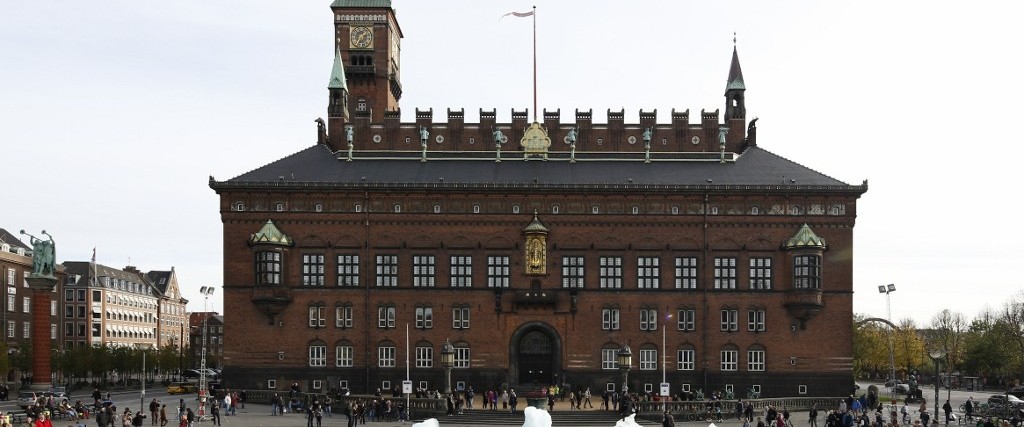
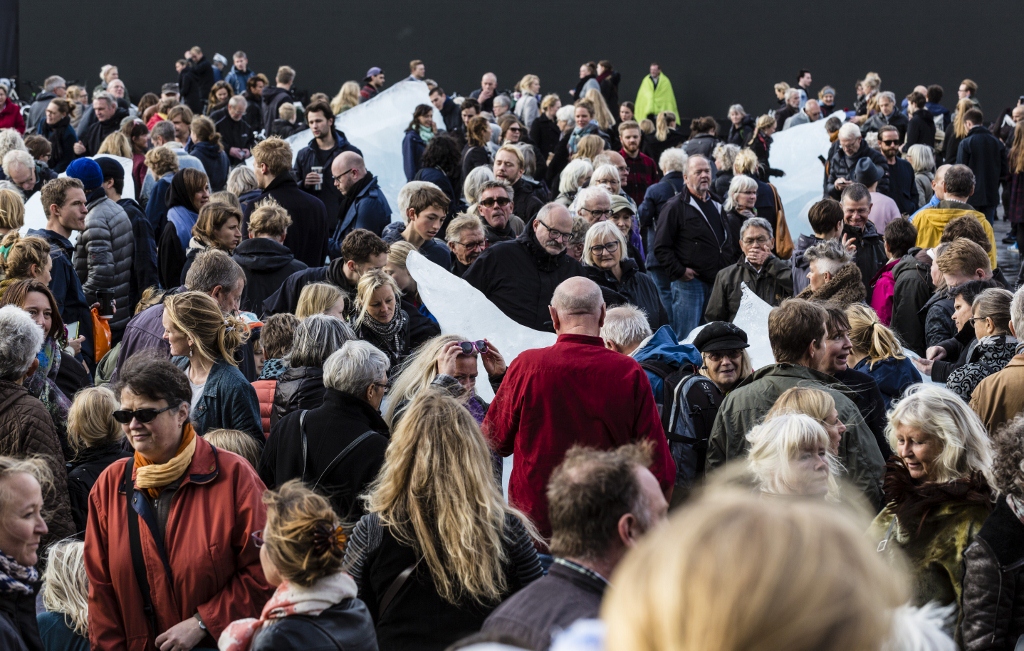 Olafur Eliasson and Minik Rosing, Ice Watch, 2014; City Hall Square, Copenhagen. Photo: Anders Sune Berg (c) Olafur Eliasson
Audience member: I have a question concerning science and art because you say ‘science’, but there isn’t just one ‘science’, of course. Certain areas of science seem important not only for art, but also for philosophy. Physics, for example, because something like quantum theory clearly relates to questions about the beginning and the way in which we construct reality. What are the areas of science that you find most relevant, that you feel can impact your work?
Olafur Eliasson: Often the typical mistake that you encounter at conferences on art and science is that the scientists talk about science and they use art as examples. The art is made into a vehicle for explaining some kind of scientific problem. I am not so interested in this approach. I am more interested in how science has allowed us to see the world in different ways. That has to do with the history of science and the critique of the history of science. Because science has also made a number of great mistakes. I am very interested in how society uses science to understand itself and not so interested in how science understands itself – if only because I just don’t understand this. So I am really interested in science as a cultural phenomenon. I am interested when a scientist not only says something about science but says something about the world, because then I can understand what is being discussed.
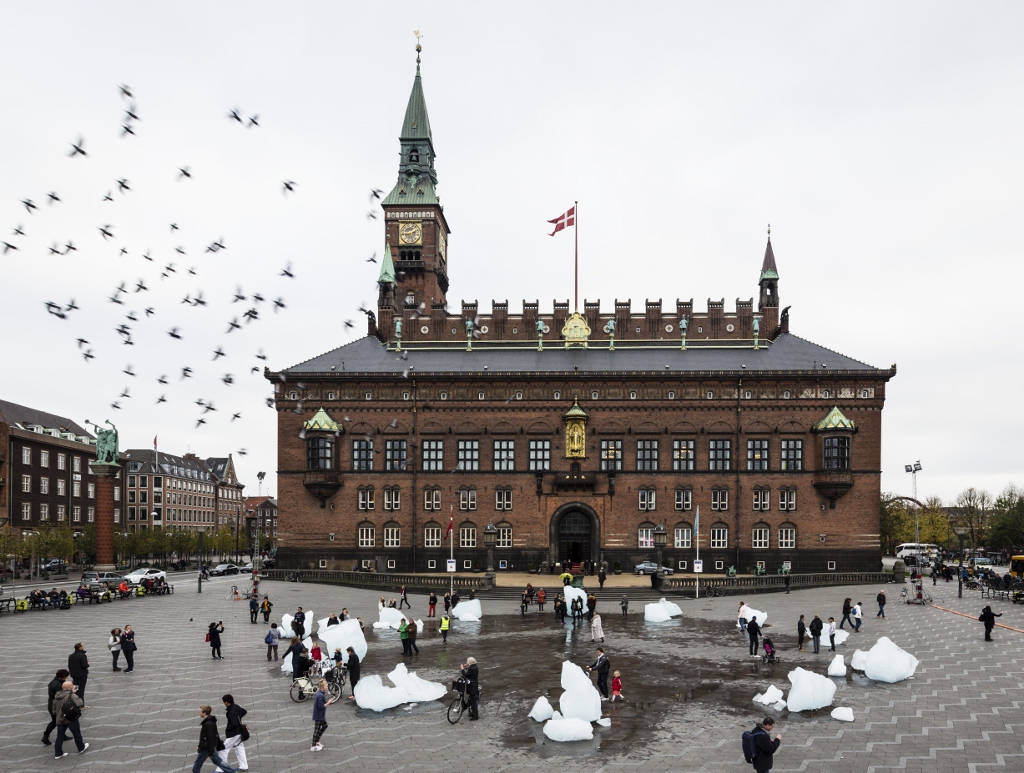 Olafur Eliasson and Minik Rosing, Ice Watch, 2014; City Hall Square, Copenhagen. Photo: Anders Sune Berg (c) Olafur Eliasson
Some years ago, I was working a lot with the sociologist Bruno Latour, who is maybe more interested in the critique of science history. He has presented great arguments for introducing intentionality into objects. Conventionally, we speak about ‘intersubjectivity’, the dynam- ics and politics of human subjects. But particularly in the last five years, Latour has introduced this notion of interobjectivity. His argument is to exclude subjectivity and focus on objects as agents, what he calls the actor–network theory. Basically, the idea is that this table once was a tree and will someday break down into soil, and it is therefore a part of a sequence. It’s an object involved in an interrelationship with the world. This part of his science was of great interest to me. Then I moved on to a different field of science, to neuroscience, which I’ve been interested in the last year and a half or two years. The field of neuroscience, in addition to the cognitive sciences and the study of perception, asks how we actually feel the world. What is somatic knowledge?
For example, how is it that I can forget a certain street but my body remembers it? I am walking and I go, wow, that’s funny! I do not know what I see, but I feel the environment is familiar. I think this is something very common. You have not been there since you were a child maybe. In the field of neuroscience, there is so much that is interesting, but also so much that is not interesting for an artist, such as aesthetic neuroscience, which artists are supposed to find interesting, but which is about establishing a predictable system of aesthetics. Of course, we are interested in diversifying the rules of how experiences are made.
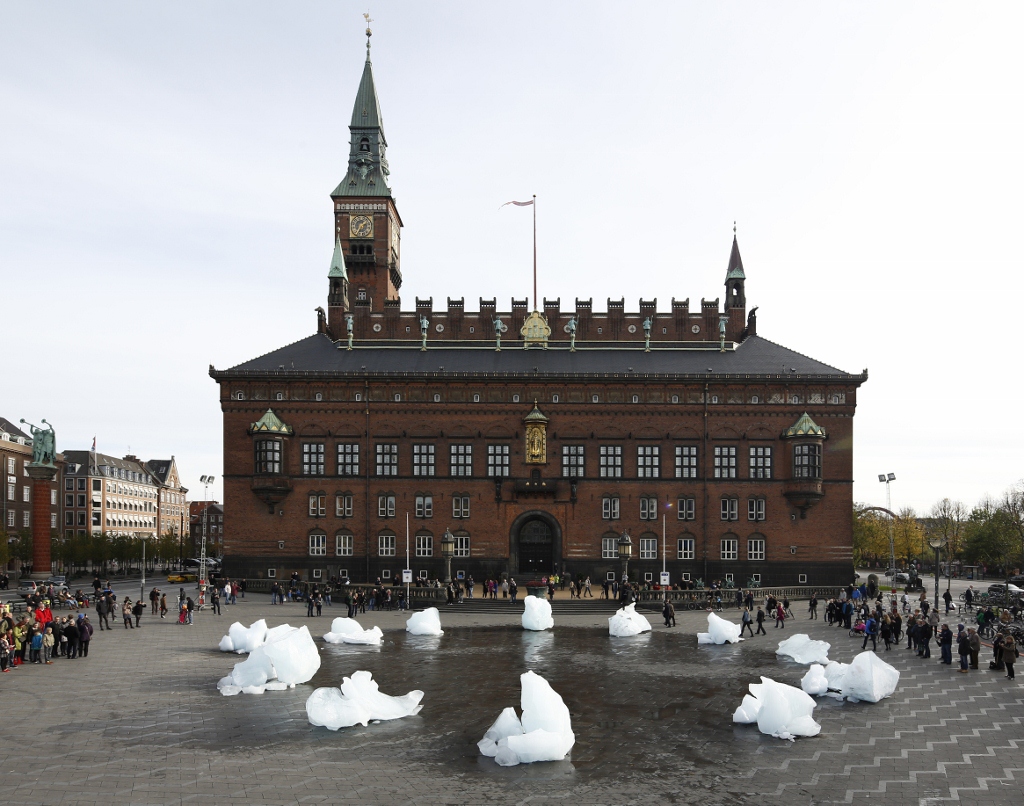 Olafur Eliasson and Minik Rosing, Ice Watch, 2014; City Hall Square, Copenhagen. Photo: Anders Sune Berg (c) Olafur Eliasson
I am more drawn to the field of social neuroscience. In Germany, for instance, the Max Planck Institute has a large department for social neurosciences, which is researching con- templative practices like meditation and compassion-training. I invited the director of the department, professor Tania Singer, to come here and talk about compassion, but, unfortunately, she was unable to come.
I am generally interested at the moment in compassion and empathy. To a certain extent, we all have the ability to put ourselves in another person’s place, and, emotionally speaking, this is not just about feeling sorrow for someone or feeling the other person’s pain. It’s also an ability to feel responsible. And this is today somehow numbed by the great extent of media exposure of just about anything you can imagine. When I read the paper and I see somebody else essentially devastated, I don’t feel anything. Why not? Why are my emotions disconnected from the mediated understanding of the world? Social neuroscience is now working with what is going on here. I am not really fully into the research, but I am trying to involve this in my work. So then I asked this particular scientist to come to our school and we developed an experiment. The tickling experiment that we did two weeks ago was actually a small experiment, kind of an outline for social interaction. I am particularly interested in how we feel increasingly self-absorbed and why there are not more economies in the world that support the notion of altruistic systems. So this is the field of science with which I am working now.
Of course, as artists, we should not see ourselves as people who work in laboratories. I occasionally, and perhaps mistakenly, call my studio a laboratory, but it is not a laboratory in the mythologised sense of a laboratory separated from the world. The artist studio must not be outside of the world. It must go out into the world. I would like to claim the world as our laboratory and the artist’s studio as reality. Because this is how we increase our sensitivity to the local. You cannot step out of anything; you can step into everything, and that is in your studio. You are in fact real and the world around you is a laboratory that can change.
________
Olafur Eliasson is a Danish-Icelandic artist known for sculptures and large-scale installation art employing elemental materials such as light, water, and air temperature to enhance the viewer’s experience.