
Review
Zarouhie Abdalian / MATRIX 249
September 16, 2013On View
UC Berkeley Art Museum
August 2 - September 30, 2013 Art Practical PickParticipatory democracy in America is inescapably acoustic in terms of both the processes and imagery that shape it. Take the common protest chant, “This is what democracy sounds like,” or the Texas senator Wendy Davis’s marathon filibuster this past June, in which she was required to continuously argue her position (and did for twelve hours). Both are examples, albeit dramatic ones, of “letting the people’s voice be heard,” a figure of speech whose aural imagery reverberates in a host of related phrases that with varying metaphoric elasticity tie democracy to the transmission and reception of sound (think of “Let freedom ring!”).
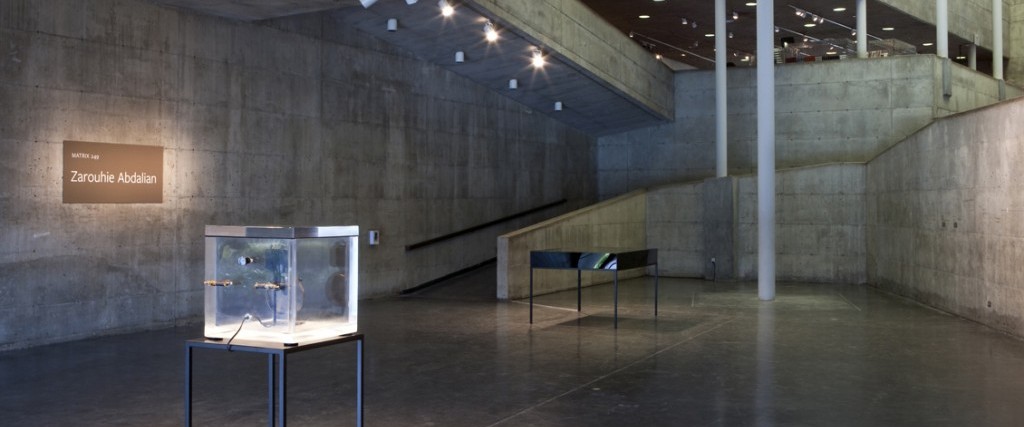
Zarouhie Abdalian’s solo exhibition, number 249 of the MATRIX series, currently on view at the UC Berkeley Art Museum, neatly stages the tensions and interferences inherent to our auditory democracy through the pared-down vernacular of minimalist sculpture. One can hear Each envelope as before (all pieces 2013), one of a trio of pieces, before one sees it: a steady if slightly arrhythmic knocking echoes throughout the museum’s soaring concrete interior.1 When one does finally encounter it, one can’t see much. Abdalian completely obscured the sound-generating mechanism within an opaque, black plexiglass vitrine that initially brings to mind a giant iPhone.
Positioned across the gallery is As a demonstration, for which Abdalian has encased a continuously ringing alarm bell inside a transparent plexiglass cube. The cube is a vacuum chamber, so the sound waves generated by the alarm have no way to travel beyond the anechoic environment in which the alarm is sealed. Complicating the inverse phenomenological pairings of the first two works—that which we can hear but can’t see and that which we can see but not hear—is the exhibit’s third sculpture, Ad libitum (If I Had a Hammer), a long metal string for a musical instrument strung across bone frets nailed into the gallery wall and wound around a single tuning peg.
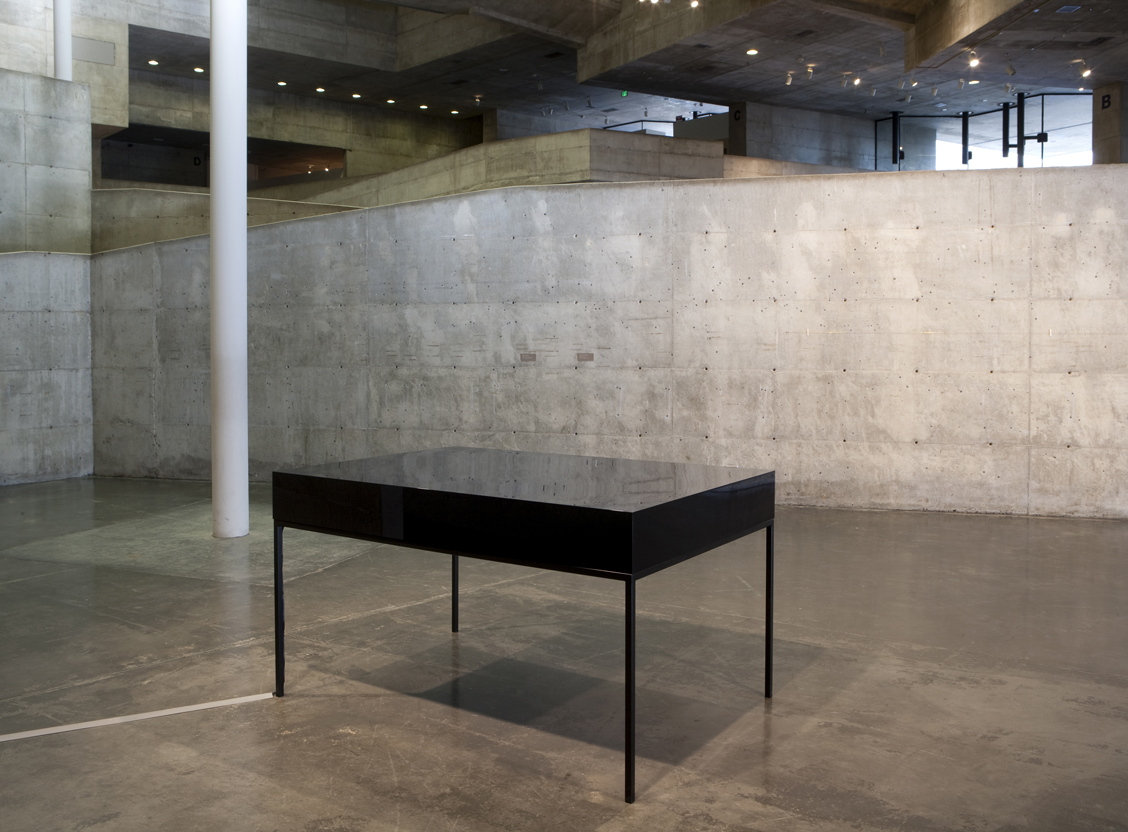 Zarouhie Abdalian. Each envelope as before, 2013; acrylic vitrine, electronics, and steel; 47 ¾ x 70 x 38 in. Courtesy of the Artist and Altman Siegel, San Francisco. Photo: Sibila Savage.
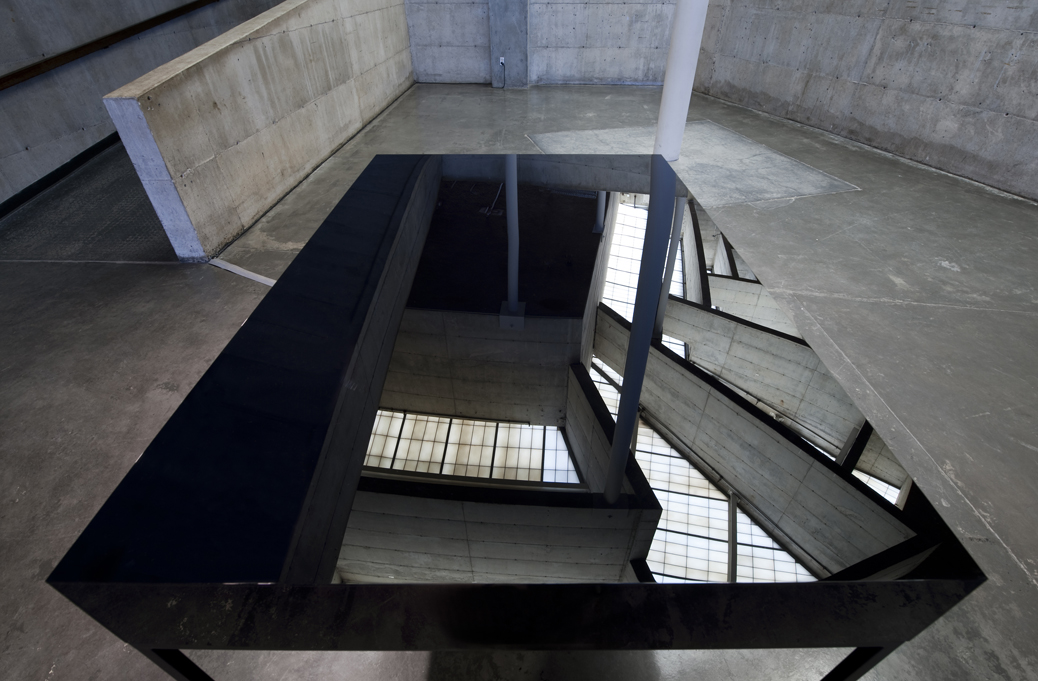 Zarouhie Abdalian. Each envelope as before, 2013; acrylic vitrine, electronics, and steel; 47 ¾ x 70 x 38 in. Courtesy of the Artist and Altman Siegel, San Francisco. Photo: Sibila Savage.
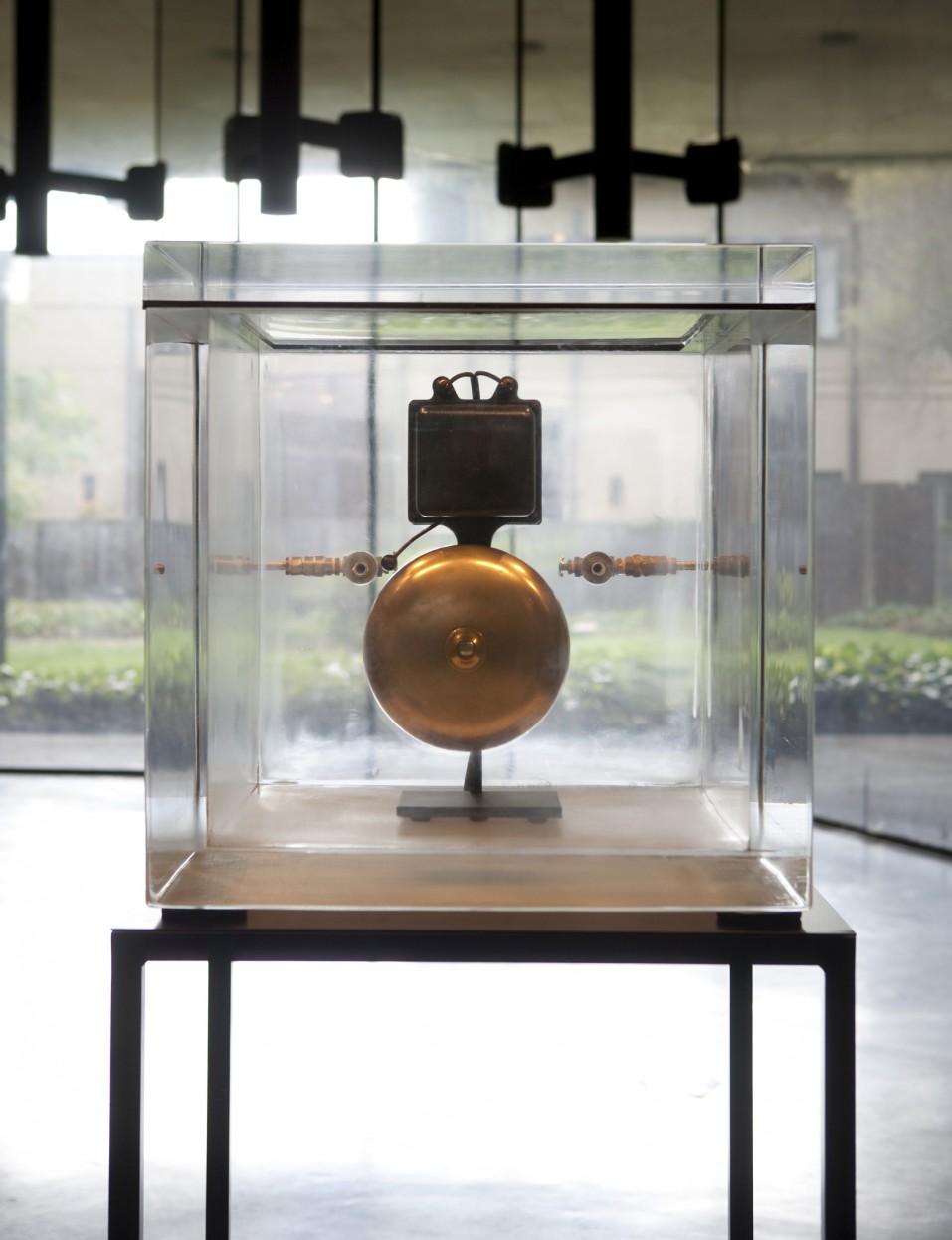 Zarouhie Abdalian. As a demonstration, 2013; acrylic vacuum chamber, electric bell, and steel; 22 x 22 x 25 in. Courtesy of the Artist and Altman Siegel, San Francisco. Photo: Sibila Savage.
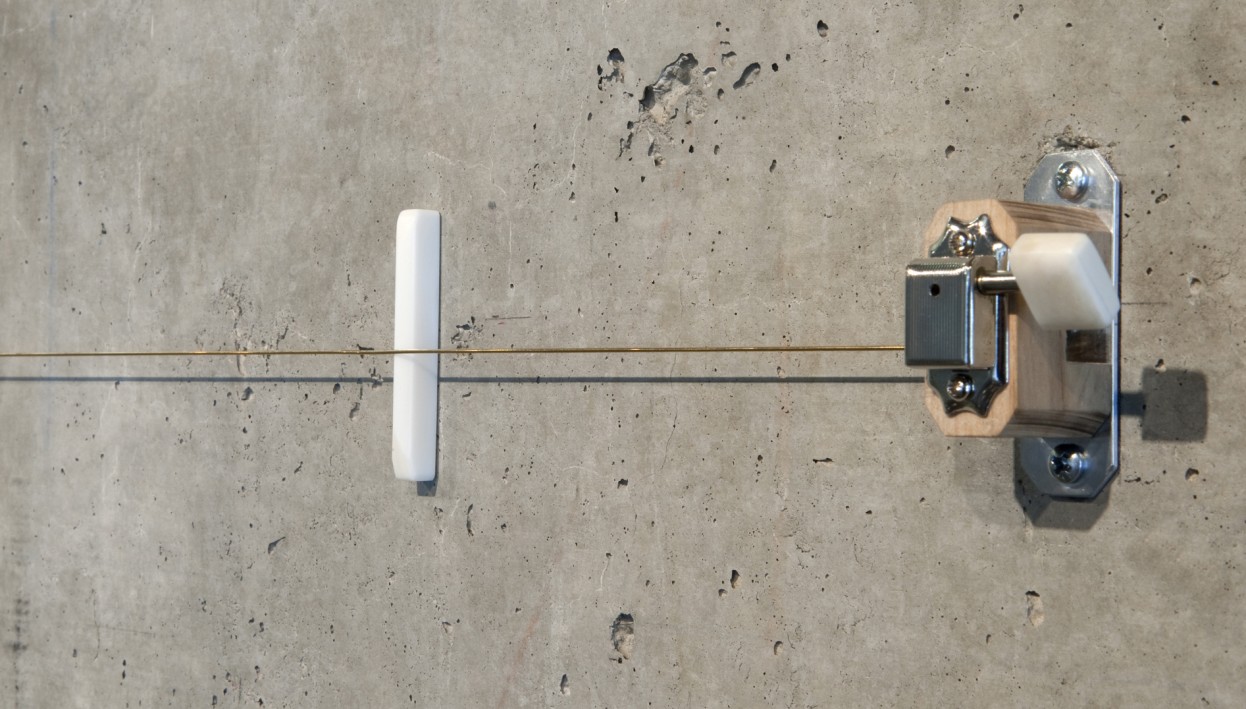 Zarouhie Abdalian. Ad libitum (If I Had a Hammer), 2013; bone, brass, wire, and tuner; dimensions variable. Courtesy of the Artist and Altman Siegel, San Francisco. Photo: Sibila Savage.
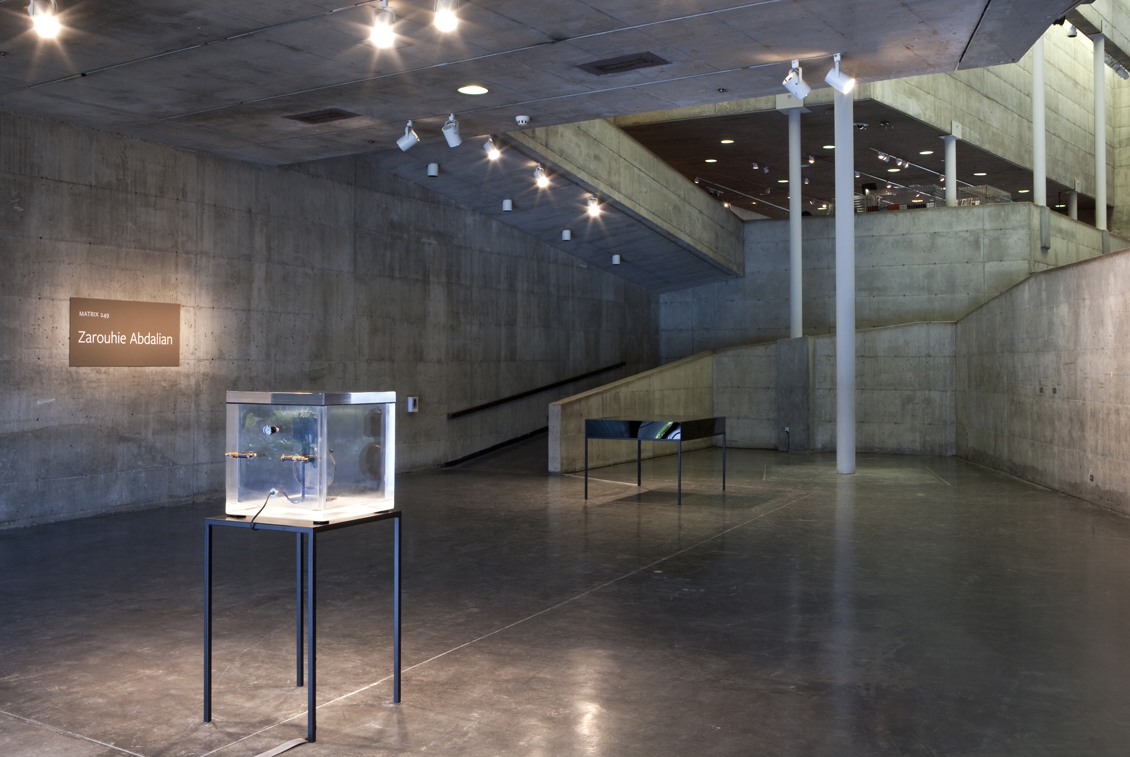 Zarouhie Abdalian. Zarouhie Abdalian/MATRIX 249, August 2 through September 29, 2013; installation view, UC Berkeley Art Museum (BAM/PFA), Berkeley, California. Photo: Sibila Savage.
The piece’s parenthetic title references the Pete Seeger and Lee Hays 1949 protest song, “If I Had a Hammer (The Hammer Song).”2 The conditional if that forms the song’s plaintive lyrical refrain finds formal expression in Ad libitum’s lone string, wound taut as if waiting to be plucked, as its titular Latin phrase suggests, “at one’s pleasure.” But, as Abdalian’s other two pieces make clear, processes of transmission are rarely clean (or, for that matter, the simple results of free will). Interference is unavoidable and perhaps inevitable but certainly never neutral, as the National Security Agency and WikiLeaks revelations—and the US and British governments’ subsequent draconian responses to them—have made frighteningly clear. Abdalian, then, leaves us to ponder whatever does it matter what democracy sounds like when—to paraphrase the famous tagline from Alien (1978)—no one can hear you scream?
Zarouhie Abdalian / MATRIX 249 is on view at UC Berkeley Art Museum, in
Berkeley
, through September 30, 2013.