Shotgun Review
Existe lo que Tiene Nombre: Contemporary Photography in Mexico
May 17, 2015On View
Galería de la Raza
SF Camerawork
April 2 - May 23, 2015 Group ShowSF Camerawork’s Existe lo que Tiene Nombre: Contemporary Photography in Mexico marks the U.S. debut for many of its eleven artists, all of whom were born between 1970 and the early 1990s. Despite the exhibition’s small size, it offers a compelling glimpse into geographically specific but broadly persistent concerns in photography. In collaboration with Galería de la Raza, the exhibition is a brief survey loosely organized around artists using photography and video to negotiate their traditions and fallacies, while also engaging issues of identity, documentary, and landscape.
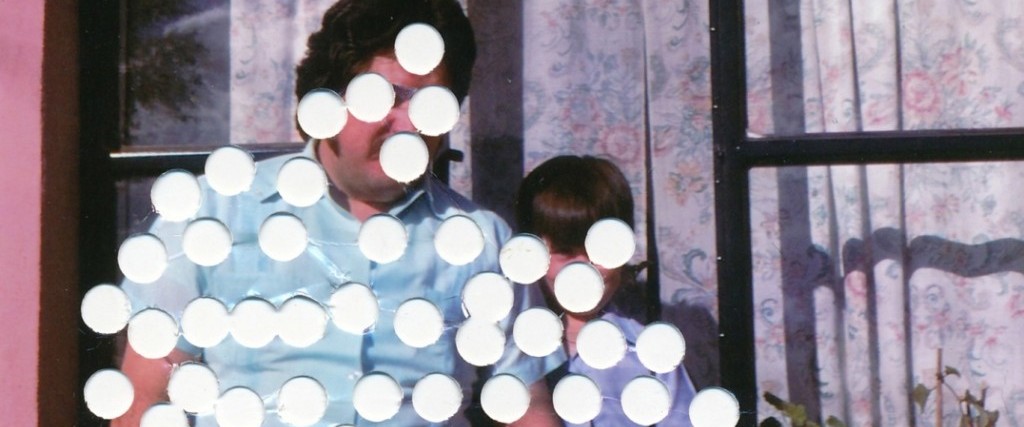
In David Vera’s Sweetbook (2014), a 4-by-6-inch photograph suspended a few inches from the wall shows a man and a young child, her small figure shrinking behind his burly arm. They sit outside against a windowsill, potted plants at their side. The photograph appears dated, given its size and muted purples, blues, and pinks, as well as her thick bangs and his mutton chop-style sideburns. Despite these minor clues, little can be made of their identity because a hole punch has left a pattern of white, circular cutouts across the details of their faces and bodies. On a small shelf below the photograph, the pages of an open journal hover in mid-turn. The missing pieces of the photograph dot the lined paper as though they have fallen like confetti onto the pages, forming loose arrangements that nearly resemble text. The work evokes a loss of identity, but not disappeared identity; rather, its parts have been fragmented, dispersed, and reorganized in a new context—a new home.
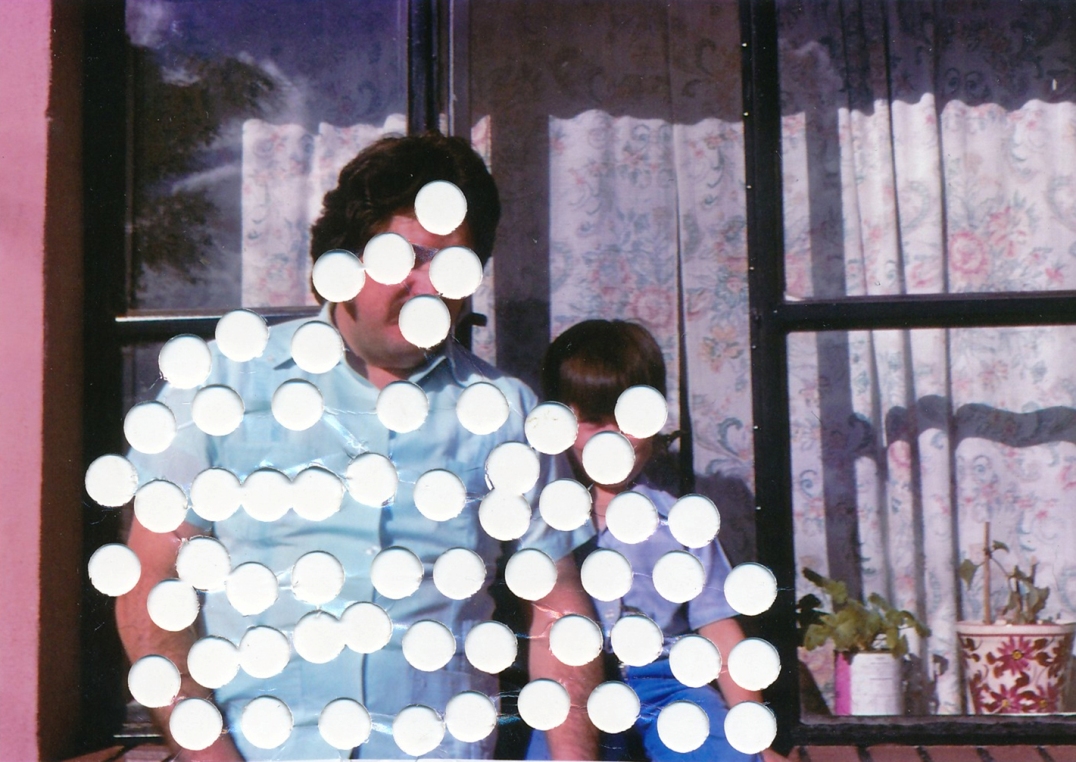 David Vera. Sweetbook, 2014; Courtesy of the Artist and SF Camerawork.
Anuario Familiar (Family Yearbook) (2011–2014) likewise addresses shifting identities via domestic snapshots. Artist Bruno Ruiz’s three-ring binder of Polaroids slipped into dingy, plastic photo-album pages seemingly presents an intimate portrayal of a family. But the album’s cast of recurring characters exchanges costumes—a fur jacket, masks, and jewelry—while drawings on their faces manipulate and disguise. Their subtly performative quality plays with notions of traditional familial roles and identities.
If the snapshot symbolizes conventional representations of the domestic, these staged and manipulated works puncture its claim on documentation and memory. But rather than leave me empty, bereft of the comforts of kinship, they establish a framework for new affinities. Revisiting long-standing practices in photography, these two works create space for contemporary understandings of space and belonging. While portrayals of manipulated representation and decaying urban landscapes may seem well established, when forty-three students can disappear1 it seems that discourses around representation, memory, and politics of urbanism are not passé; their potent relevance speaks to their recurrence in the work of artists working in Mexico today.
_______
Kathryn Wade is a curator and writer in San Francisco, and is currently completing her MA in Curatorial Practice at California College of the Arts.
Existe lo que tiene nombre: Contemporary Photography in Mexico is on view at Galería de la Raza, in
San Francisco
,SF Camerawork, inSan Francisco
, through May 23, 2015.