Signs of the Times
By Ashley Stull MeyersWith much the same irony, many of the 2017 Women’s March signs were exclusionary to struggles that event should have championed.
More »
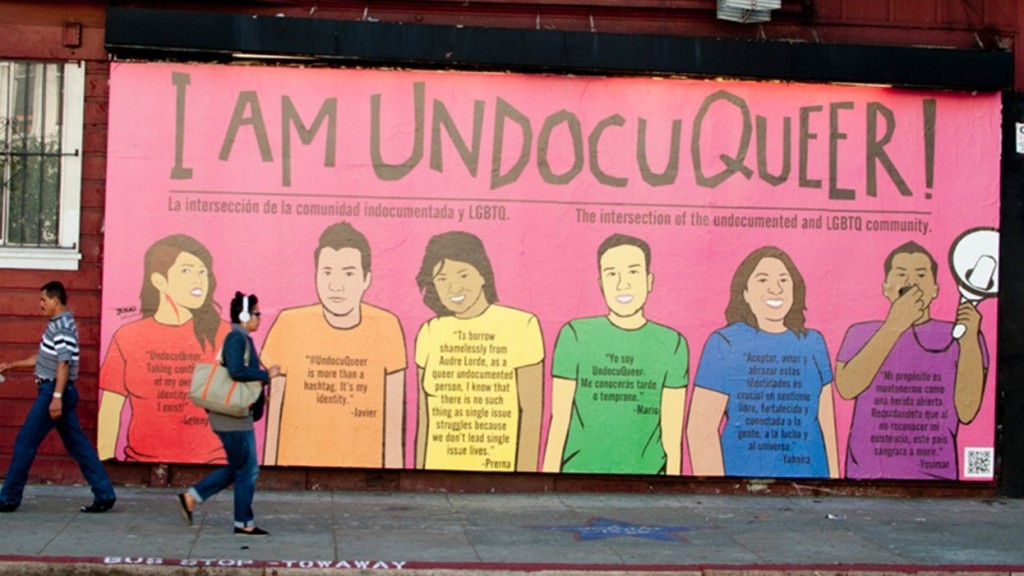
For our first issue of 2017, we asked eight contributors: what can art do in times of social and political turmoil? This line of inquiry seemed undeniable – rearing its head in the poignant essays in our last issue Art + Citizenship, the driving force behind post-election actions across the country, and at the center of how we as an arts publishing organization were evaluating our own efficacy as an arts publishing organization.
We sought out a range of voices whose vocations include: art critic, curator, professor, radical organizer, visual artist. The responses we received surprised us. Taken together, these essays shake up the very framework of the issue as we laid it out, breaking up our well-groomed inquiry into a complex cluster of meaning. Too, there is a distinct personal tenor to the narratives in this issue, one we don’t often see in arts writing. I take this as a sign that those of us that teach, advocate, institutionalize, or historicize art should be asking ourselves the same question. Art can do a lot of things, but the real question seems to be: what can we do? Art is just one of many areas under serious threat in our current landscape. Looking to radical visionaries that came before us and those that walk among us now, many of our writers summon an incredible invocation of the future through their writing. Art can help us see differently, to imagine better realities. It’s time to put our imaginations to work, or we risk being implicated in fortifying the same systems we hope to crumble. Look to art. Act swiftly. As Vivian Sming notes in her essay, “Art can’t do anything if we don’t.”—Kara Q. Smith
With much the same irony, many of the 2017 Women’s March signs were exclusionary to struggles that event should have championed.
More »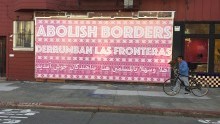
The border has been naturalized within American consciousness, but as ABOLISH BORDERS visually proclaims, the Chicanx community has always contested it.
More »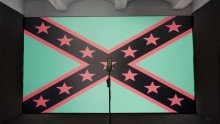
One of the most troubling aspects of the current moment is the degradation of public speech itself.
More »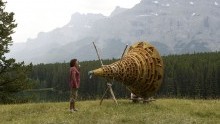
If it does nothing else, art gives us authorship of our experience.
More »
It is as if we are fine with business as usual, as long as we have a place for critical discourse and acknowledgement.
More »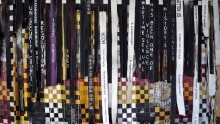
In our rush to find new ‘political art’ for these times, why don’t we also look to those who have been resisting this whole time?
More »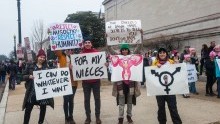
Succinct and timely phrases are like a knife that cuts through time and can be repurposed by later generations.
More »
Our art must at this moment function as a warning cry.
More »A series developed in collaboration with Lucas Artists Residency Program at Montalvo Arts Center.
what are you looking at? is a podcast featuring two queer black women in the Bay Area talking about art, art crushes, art world gossip, regular gossip, and millennial woes. Writer and art critic, Elena Gross, is joined by artist and selfie-queen Jay Katelansky as co-host. Together they take on art, popular culture, and queer black shit!
Featured Episodes: Episode 1: Rooting for Everybody Black Episode 3: What's the deal with California? Episode 4: Black Hoooooles Episode 8: Bittersweet End Notes(un)making is a podcast hosted by visual artist, Weston Teruya. He welcomes artists, arts administrators, and cultural workers of color to get real about their lives, practices, and careers. Each episode is an in-depth look into how art gets made, but more importantly how these folks are seeing to the system of art’s (UN)making.
Featured Episodes: Episode 1: Gaye Chan Episode 3: Grace Rosario Perkins Episode 7: Postcommodity Episode 9: Lukaza…
A space to reflect, listen, and struggle to comprehend the impact of Ghost Ship through music, art, and writing.
Seven contributors consider how citizenship relates to cultural and political systems as they intersect with artistic practices, institutions, and diverse publics.