Introduction to An Unending Theft of Opportunity
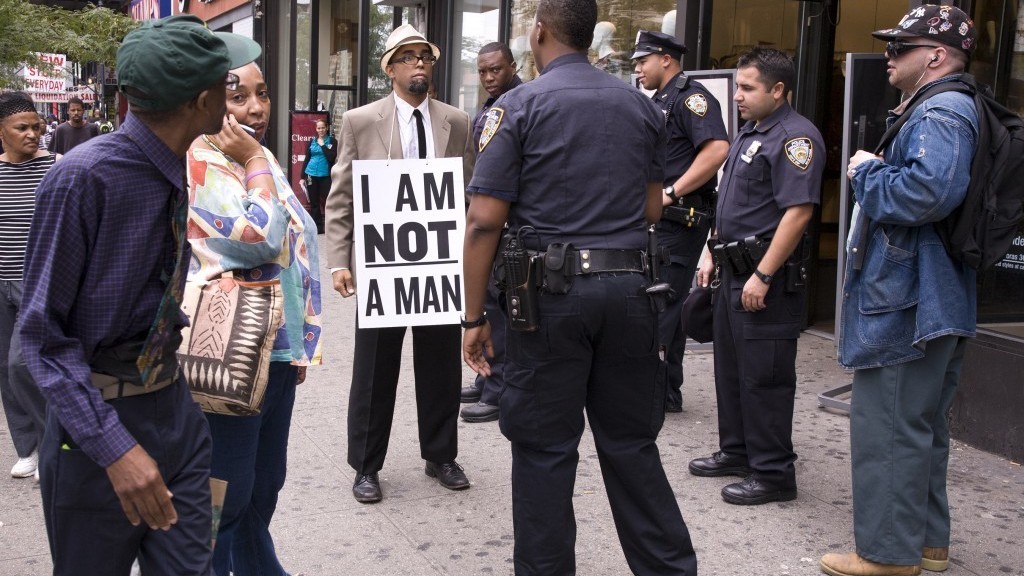
By Veronica Jackson, Patricia MaloneyThe violence that begins with systemic exclusions from educational and economic opportunities ends with weaponized force.
More »
Artists interpret culture. They report on the social condition. They perform, document, and represent our human experience. This thematic issue draws from the archives of Art Practical, Daily Serving, East of Borneo, Lenny, and Art21 to chronicle artists’ responses to the deeply intertwined realities of racism and economic inequity. It also underscores the limited participation in institutionally sanctioned art that people of color experience as producers and viewers. This is the first time that a thematic issue in this publication draws extensively on archives besides its own. Our intention is to demonstrate the prevailing concern artists and writers across the U.S. (and beyond) have for the effects of economic violence, how it shapes the representation and reception of culture, and where the boundaries of accessibility are drawn.
The articles in this thematic issue are presented for the reader to juxtapose, compare, contrast, and critique the work featured. The artists highlighted are of different races and ethnicities. They employ a multitude techniques and methodologies, and they possess individual agendas. What they have in common is their exposition of the unending theft of opportunity and the subsequent poverty—financial and cultural—that is created. Their projects bring into focus questions about who is creating the representation and how that representative body shapes the reception of race. The artists included here undertake the hard work of conjuring the violence that is sometimes only perceptible as absence or void. It is therefore all the more important to make room for it.—Veronica Jackson with Patricia Maloney
The violence that begins with systemic exclusions from educational and economic opportunities ends with weaponized force.
More »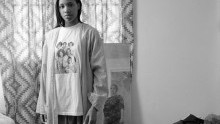
Frazier marshals photography’s innate ability to create visibility–an indelible visual record–for the marginalized and oppressed.
More »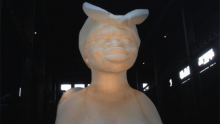
Walker’s return to the figurative monument form in the context of a site-specific, research-centric public art project represents a completion of the circuit from monument to anti-monument.
More »
When you think of resistance, you think of fighting and resisting against something. You have to fight against something
More »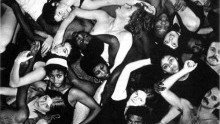
Ceremony of Us set itself the goal of making a dance happening of a healing encounter between conflicting races.
More »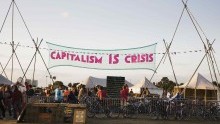
The result is a multi-dimensional conversation about the potentialities, limitations, and negotiations faced when subversive practice is embraced by institutional powers.
More »
Blackness is a technology in and of itself. The way we survive and thrive has always been contingent on building technologies against the system that sets us up to fail.
More »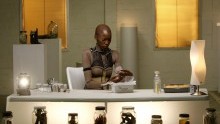
Contemporary black artists often refute conventional notions or images of blackness and replace them with altered realities.
More »
These two stories illustrate the challenges that appropriation-based institutional critique continues to represent for art-world institutions that are resistant to change.
More »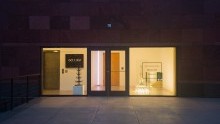
“For a while, I thought I was being put in a box. But it’s the most glamorous box I’ve ever been in, so whatever.”
More »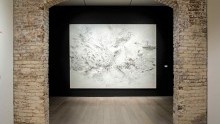
Simon Njami’s efforts to present the work of contemporary African artists within a Western context yields remarkable results.
More »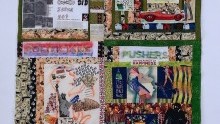
"Some people would call my work crazy, but I don’t mind being called crazy. Look at the world, or just look at what’s going on here in Kansas." –NedRa Bonds
More »
We obsess about physical violence, which is bad, but it is the tip of the iceberg compared to the way that poverty is reproduced and expanded.
More »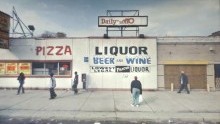
By inserting himself as the artist/photographer/author, as opposed to a neutral observer, he dilutes his credibility as a critic.
More »
When manufacturing exits an area, it leaves its trace on workers' bodies.
More »
Sometimes you are in opposition and think you have no voice, but you are still a part of it and you're paying into it.
More »This issue of Art Practical aims to take nothing for granted while providing a different venue for collaborations between visual artists and poets.
An issue exploring moments of dialogue, creativity, bafflement, amusement, failure, and wonder that occur when the arts and sciences collide.